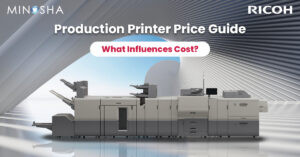
Production Printer Price Guide: What Influences Cost?
Investing in a production printing system is a strategic decision for commercial print providers, publishers, marketing agencies, educational institutions, and enterprise print departments. Buyers often focus on the purchase price first, yet the visible price tag represents only one part of the overall investment. Equipment capability, workflow requirements, service expectations, and print volume can significantly influence the final cost of ownership.
The market includes a wide range of digital production systems designed for different applications and production environments. A device intended for occasional short-run jobs will differ greatly from a high-volume platform operating continuously throughout the day. Understanding the factors that influence pricing helps businesses compare solutions more effectively and avoid unexpected operating expenses. This guide explains the major cost drivers, ownership considerations, and evaluation criteria without discussing specific price figures.
What Is a Production Printing System?
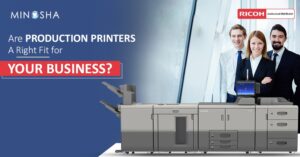
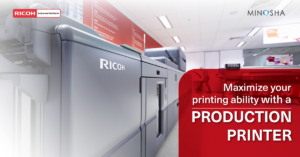
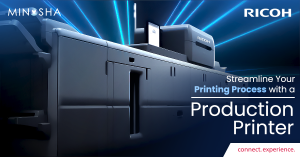
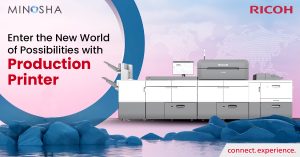
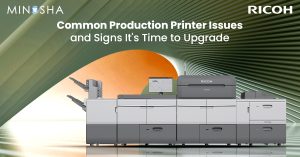
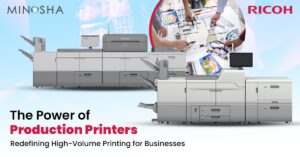
A production printing system is a high-performance digital printing platform designed for commercial or enterprise-scale output. It is built to handle larger print volumes, faster production speeds, and more demanding applications than standard office printers. These systems often support advanced media types, automated workflows, and professional finishing equipment. Reliability and consistency are central to their design.
Production printing environments typically operate under tight deadlines and require predictable performance. Businesses use these systems for books, manuals, brochures, direct mail, marketing collateral, packaging prototypes, and transactional documents. The equipment is engineered for sustained operation rather than occasional use. As production requirements increase, system complexity and cost usually increase as well.
Why Price Comparisons Can Be Misleading?
Two printing systems may appear similar in specifications yet differ substantially in real-world operating capability. One device may include advanced automation, higher duty cycles, or broader media support that is not immediately obvious in a basic comparison. Buyers who compare only headline specifications may overlook critical productivity differences. A lower initial price can sometimes lead to higher operating costs later.
Manufacturers also package software, service agreements, training, and workflow tools differently. Some solutions include essential production features as standard, while others require additional modules or licenses. Installation requirements and operator skill levels may vary between platforms. A meaningful comparison must consider the complete production environment rather than hardware alone.
The Most Important Cost Drivers
Print speed is one of the strongest influences on system pricing because faster engines require more robust mechanical and electronic components. Higher monthly duty cycles also increase cost because the equipment must withstand greater production loads over time. Color management capability, image quality controls, and calibration systems add further complexity. Businesses producing premium marketing materials often prioritize these features.
Media handling capability is another major factor because supporting heavier stocks, textured papers, synthetic substrates, or oversized sheets requires specialized transport systems. Integrated finishing modules such as booklet makers, folders, trimmers, and stackers can significantly increase overall investment. Workflow automation software reduces labor but adds software and integration costs. Service coverage and uptime commitments further influence long-term ownership expenses.
Print Speed and Productivity
Faster printing systems can complete jobs more quickly, reduce turnaround time, and support higher daily output. Production environments that handle time-sensitive work often value speed because it directly affects scheduling flexibility and customer responsiveness. However, higher productivity usually requires more advanced engineering and higher-capacity consumable systems. Those enhancements contribute to increased equipment cost.
Productivity should be evaluated alongside actual workload rather than theoretical maximum speed. A business producing moderate volumes may not benefit from the highest-speed platform available. Oversizing equipment can increase capital cost without delivering proportional operational value. Matching speed to realistic production demand is usually the most economical approach.
Monthly Volume and Duty Cycle
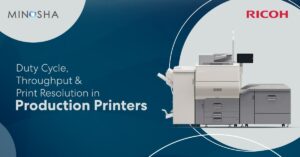
Manufacturers rate production systems for expected monthly workloads, and that rating strongly influences design robustness. Higher duty-cycle machines typically include stronger components, larger paper capacities, enhanced cooling systems, and more durable transport mechanisms. These features improve reliability during sustained production periods. They also increase manufacturing complexity and cost.
Selecting a system with insufficient capacity can lead to more frequent maintenance interruptions and shorter component life. Choosing a platform with capacity far beyond current demand may increase investment unnecessarily. Buyers should analyze historical print volumes, seasonal peaks, and future growth plans before selecting a duty-cycle category. Capacity planning is a critical step in cost control.
Color Capability and Image Quality
Color production systems generally require more sophisticated imaging technology than monochrome platforms. Advanced color engines include precise registration controls, calibration tools, profiling capabilities, and image stabilization systems. These features help maintain consistent output across long production runs. Higher image quality expectations usually increase equipment complexity.
Applications such as catalogs, brochures, photo books, and premium marketing materials often demand tighter color control. Businesses serving brand-sensitive customers may need expanded color management features and professional workflow tools. Those requirements can affect both hardware and software investment. Image quality expectations should therefore be defined early in the evaluation process.
Media Handling Flexibility
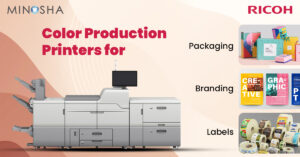
The range of substrates a production system can handle has a significant impact on price. Standard office paper support requires less engineering than support for heavy cardstock, envelopes, labels, textured media, synthetic sheets, or long-sheet applications. Additional sensors, transport controls, and feeder technologies are often needed for broader media compatibility. These enhancements increase both functionality and cost.
Flexible media handling can create new revenue opportunities for commercial print providers. A system that supports diverse substrates may reduce outsourcing and enable specialty applications. However, businesses should assess whether those capabilities align with actual customer demand. Paying for unused media features rarely improves return on investment.
Finishing Equipment
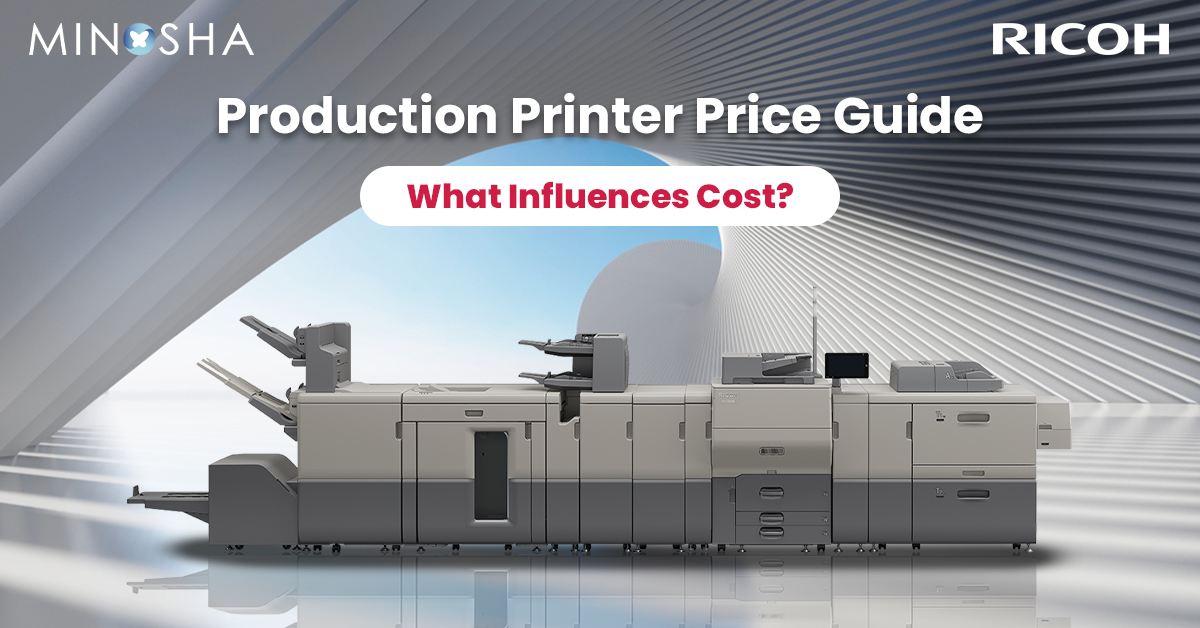
Integrated finishing is one of the largest variables in a production printing investment. Finishing modules can automate folding, stapling, booklet making, trimming, punching, stacking, and binding operations. Automation reduces manual labor and improves consistency across large print runs. Each additional finishing function adds equipment cost and maintenance requirements.
The value of finishing depends heavily on job mix and labor costs. High-volume booklet production may justify integrated booklet making, while simple document printing may not. Some businesses begin with basic finishing and expand later as demand grows. Planning for future finishing expansion can provide flexibility without overinvesting initially.
Service, Maintenance, and Uptime
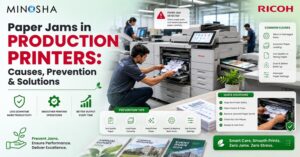
Production printing revenue often depends on equipment availability, making service support a critical cost consideration. Preventive maintenance programs, remote monitoring, technical response times, and parts availability can influence operational continuity. Comprehensive support agreements may increase ongoing cost but reduce unplanned downtime. The financial impact of downtime is frequently underestimated during procurement.
Buyers should examine service coverage terms carefully, including response commitments, consumable responsibilities, and operator maintenance requirements. Local technical support availability is especially important for businesses operating tight production schedules. A lower-cost system with limited service infrastructure may become more expensive over time. Uptime performance should be evaluated as a business metric, not just a technical specification.
Consumables and Operating Expenses
Consumables such as toner or ink, developer, drums, fusers, maintenance kits, and specialty substrates contribute to ongoing operating expense throughout the life of the equipment. Production cost per page can vary significantly depending on coverage, media type, and application. High-volume environments should analyze consumable efficiency rather than focusing only on hardware cost. Operating expense often exceeds initial equipment cost over the life of the system.
Waste management, storage requirements, and inventory control also affect consumable economics. Some systems support higher-yield supplies or automated replenishment features that improve operational efficiency. Businesses should request realistic production cost estimates based on their own job profiles. Accurate workload analysis is essential for meaningful operating-cost comparisons.
Installation and Infrastructure Requirements
Production printing systems may require dedicated floor space, power capacity, climate control, network connectivity, and material-handling arrangements. Large configurations with multiple finishing modules can occupy significant production space. Facility preparation costs should be considered during budgeting. Installation complexity often increases with system size.
Network integration and workflow deployment may involve additional IT resources. Security policies, user authentication, print management, and data handling requirements can influence implementation effort. Businesses should assess infrastructure readiness before selecting equipment. Early facility planning helps avoid installation delays and unexpected expenses.
Hidden Costs Buyers Often Miss
Many production printing projects exceed budget because secondary costs were not identified during procurement. The following areas deserve detailed review before approval.
- Operator training: Initial and ongoing training affects productivity, error rates, and staffing efficiency.
- Workflow integration: Connecting the printer with existing software systems may require professional services.
- Color calibration: Maintaining consistent color output can involve additional tools and periodic calibration effort.
- Media testing: Specialty substrates may require testing, profiling, and setup time before commercial production.
- Downtime contingency: Backup production arrangements may be needed during major maintenance events.
- Software subscriptions: Workflow platforms may include recurring license or support charges.
- Facility modifications: Electrical upgrades, climate control improvements, or space reconfiguration can add cost.
- Inventory management: Consumable stocking policies influence working capital and storage requirements.
Careful planning of these items helps create a more accurate investment forecast. Procurement teams should request a comprehensive ownership model rather than a hardware quotation alone. Cross-functional review involving operations, finance, IT, and production management is highly recommended. A structured evaluation process reduces the risk of post-installation surprises.
Commercial Printing vs In-House Printing
Commercial print providers typically prioritize productivity, media flexibility, finishing automation, and uptime because revenue depends directly on production throughput. Their systems are often configured for diverse customer jobs and continuous operation. In-house corporate print departments may focus more on document security, workflow integration, and predictable operating costs. These different priorities influence equipment configuration and overall investment level.
Educational institutions, government departments, and healthcare organizations often occupy a middle ground between commercial and enterprise printing. They may require moderate production volumes with strong reliability and document-management capabilities. Understanding the primary business objective helps narrow the appropriate equipment category. Cost optimization is easier when the application is clearly defined.
How to Evaluate Total Cost of Ownership?
Total cost of ownership includes acquisition, installation, software, service, consumables, labor, energy, training, and disposal costs over the expected life of the system. Buyers should model realistic production volumes and application mixes rather than relying on generic estimates. Comparing ownership cost over several years provides a clearer financial picture than comparing purchase prices. Long-term analysis often changes procurement decisions.
Productivity gains should also be included in the evaluation. Faster turnaround, reduced labor, fewer errors, and lower outsourcing costs can offset higher acquisition costs. Decision makers should assess both cost reduction and revenue-generation potential. A structured TCO model supports more informed investment decisions.
Questions to Ask Before Buying a Production Printer
Before selecting a production printing system, buyers should gather detailed operational information from vendors and internal stakeholders. Clear answers help prevent costly mismatches between equipment capability and business requirements.
- What is the recommended monthly volume for our workload?
- Which media types are fully supported in production conditions?
- What finishing functions are included and which require additional modules?
- How is color consistency maintained across long runs?
- What workflow software is included with the system?
- What service response commitments are available in our location?
- Which consumables are customer-replaceable?
- What operator training is included?
- How can the system be expanded in the future?
- What reporting tools are available for production tracking?
Documenting these responses allows objective comparison across vendors. Procurement teams should involve production operators in demonstrations whenever possible. Real job testing is often more valuable than specification sheets. Practical evaluation reduces implementation risk.
Choosing the Right Configuration for Your Business
A growing commercial print provider may benefit from a scalable configuration that supports future finishing expansion and higher volumes. A corporate print room with stable document demand may prioritize simplicity, security, and predictable operating expense. Educational and government environments may emphasize reliability and ease of operation. Matching configuration to business strategy is more important than selecting the most advanced model available.
Buyers should also consider staffing capability and workflow maturity. Highly automated systems deliver the greatest value when supported by appropriate processes and trained operators. Simpler configurations can sometimes produce better financial outcomes in smaller environments. Successful investments balance capability, utilization, and operational readiness.
Brand Considerations and Market Positioning
Different manufacturers position their production platforms for different market segments, applications, and workflow ecosystems. Buyers often evaluate service network strength, software integration, reliability reputation, and upgrade pathways in addition to technical specifications. Businesses researching the best production printers should focus on workload suitability rather than brand popularity alone. Demonstrations using real customer jobs provide more meaningful insight than brochure comparisons.
Organizations that already operate a specific workflow environment may prefer compatible platforms to simplify training and support. Companies evaluating Ricoh production printers or other major production brands should compare service availability, automation features, media support, and future expansion options within their own operating context. Existing operator familiarity can also influence productivity and transition costs. Brand selection is most effective when aligned with operational requirements and long-term business goals.
Conclusion
The cost of a production printer is shaped by far more than the initial purchase price. Productivity, duty cycle, color capability, media flexibility, finishing automation, workflow software, service support, consumables, and infrastructure requirements all contribute to total ownership cost. Businesses that evaluate these factors systematically are more likely to select a configuration that supports growth, efficiency, and profitability.
A successful production printing investment begins with a clear understanding of workload, application mix, staffing capability, and future business goals. Buyers should compare complete production solutions rather than isolated hardware specifications. Careful planning, realistic volume analysis, and detailed TCO evaluation can prevent costly mistakes and improve long-term return on investment. The most economical choice is usually the system that delivers the required performance reliably over its entire operating life rather than the one with the lowest upfront price.